

Heartharbour
When ordinary years become halcyon years.

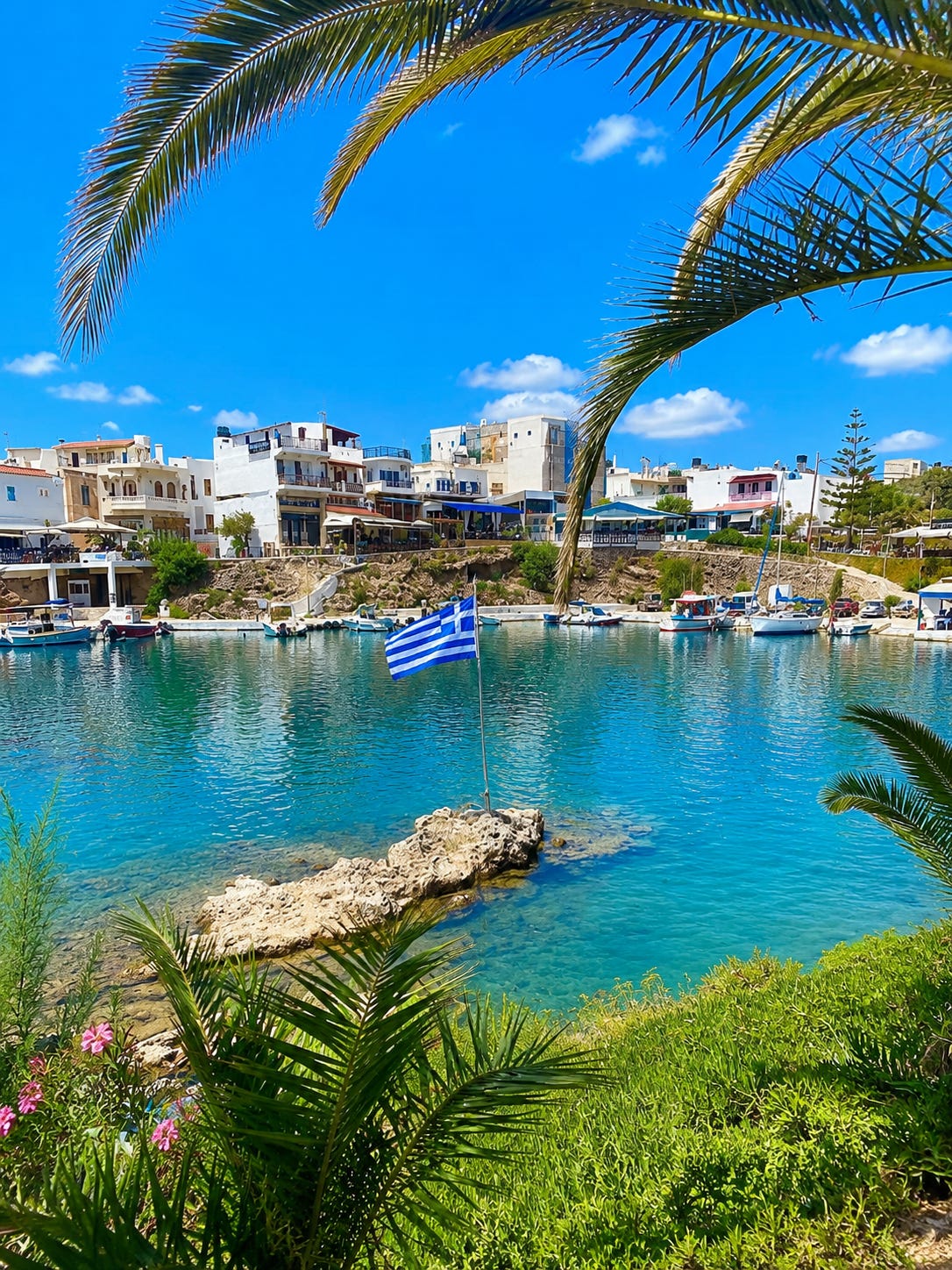
For me, my heartharbour will always be 2019, although I could only recognise it once I had sailed far enough away from it.
Looking back, I think it was our halcyon year. A season of such happiness that I didn’t realise I was living in it until it became a memory. The year my heart returns to whenever life feels heavy.
I just didn’t know it then.
I believe we only recognise our heartharbours once we’ve drifted far enough from their shores.
2019 was extraordinary but ordinary in the same breath. Gloriously, beautifully ordinary. The sort of year that slips past almost unnoticed because nothing remarkable seems to happen, until one day you realise everything remarkable already had.
The five of us; my wee family, my star-kept lover and my three growing bairns, booked holidays without hesitation. Family dinners happened because that was simply what families did. Sleepy figures still wandered downstairs each morning, hair tousled, barely awake, school bags and P.E. kits waiting by the door. Looking back, I can almost hear time humming beneath those poached eggs and blueberry smoothies, although none of us noticed it then. Mum and Dad were only ever a phone call away asking if we fancied the theatre, the zoo, or that so-and-so was having a party and we were all invited. We talked endlessly about places we’d visit one day. Greece again. Scotland again. Somewhere we’d never been before. It never crossed my mind that childhood was already slipping gently through our fingers, or that one day getting all five of us around the same table would become the greatest adventure of all. The future felt dependable then. It waited patiently for us. None of us realised we were already sailing towards a different coastline.
Then, almost without warning, the tide turned.
2020 arrived, carrying the whole world with it.
Nothing truly devastating happened to our own little family, thank goodness. There was the uncertainty, the homeschooling, the isolation from grandparents, friends and neighbours, but technology and bubbles softened the edges of it all. Looking back, those first months of lockdown felt strangely idyllic. We baked banana bread like everyone else, walked endless miles with our Red, became fiercely competitive over games of Cluedo, rediscovered croquet and badminton on warm afternoons, gutted bathrooms we’d been meaning to tackle for years, and ended our days with popcorn and family films. Our lives became smaller, but in many ways our time together became richer.
One film we watched on repeat was Saving Mr. Banks, so much so that whole scenes became family shorthand. It settled into our home alongside a few others as one of those rainy afternoon films that everyone would happily watch again. We never seemed to tire of it.
In 2020, the children had reached that age where asking for more independence would have been the natural next step. Friends, parties, driving lessons, first jobs, lives slowly unfolding beyond our front door. Instead, the world pressed pause. Their late teenage years folded back into family life for a little longer and, in a way, I treasure that. We were given time that no one could have planned for. Time around the dinner table. Time on family walks. Time that felt borrowed.
We did, devastatingly, lose friends during those years. Friends we weren’t permitted to visit. Funerals we couldn’t attend. Families we couldn’t properly comfort. Grief became something experienced at arm’s length, making loss feel strangely unfinished.
Yet this isn’t really a story about the pandemic.
Covid wasn’t the storm.
It was the outgoing tide.
It carried us away from a harbour we hadn’t realised we were leaving.
Life resumed, as tides always do.
Only it wasn’t the same life.
Children became adults. One by one they stepped aboard lives of their own, exactly as they should. Our family of five, once gathered so effortlessly around the kitchen table, became something requiring diaries, train journeys and careful planning. Nothing was lost through love. It was simply the natural rhythm of children growing up. Even so, I found myself missing the beautiful but messy inconvenience of everyone under one roof.
Then Dad became ill.
At first, none of us realised how serious it was. Like the tide creeping surreptitiously over sand, it arrived so gradually that it was easy to believe the shoreline hadn’t really moved. Hospital appointments became more frequent. Weekends disappeared into clinics, scans and deeper investigations. One inconclusive result led to another, each offering just enough reassurance to keep hope afloat.
Our conversations changed almost without us noticing.
“How did Dad seem to you?”
“He really struggled to say that word.”
“He seems so quiet.”
“I can’t believe he went to bed so early. That’s not like him.”
Hope didn’t vanish all at once. It simply adjusted itself, little by little, appointment by appointment, conversation by conversation, until, five years later, one April morning in 2025, he was gone.
Dad became memories.
Only then did I realise that I’d lost Saving Mr. Banks, too.
When she’s home, my daughter has suggested we watch it, thinking it might feel comforting, nostalgic, a way of returning to those lockdown evenings when the five of us were all together. But I can’t. I know what’s coming now. Not just in the film, but in my own life. P. L. Travers couldn’t save her father, and neither could I. A story that once felt warm and familiar now asks me to sit through a grief I wasn’t carrying the first time we watched it.
It’s extraordinary how memory works. Sometimes it doesn’t attach itself to the biggest events. Sometimes it wraps itself around a film, a song, or the smell of banana bread cooling on the kitchen side, and years later you find you can’t separate one from the other.
Somewhere along the voyage, carefree certainty gave way to house sales and probate paperwork and worries that arrive uninvited at three o’clock in the morning.
Growing older, I’ve discovered, isn’t really measured now in birthdays. It’s measured by the people who are no longer waiting for you when you return home.
Life becomes quieter in ways you never expect. One by one, the voices that shaped your days grow fainter, until all that remains is a question that visits more often than I’d like to admit.
What happens now?
I try to keep my eyes on the horizon because no one reaches a new shore by staring at the wake behind them. Even so, my heart still sails back to our halcyon year from time to time.
I don’t remember the things I once believed were important. I don’t remember what was in the news, although like so many of us I became hopelessly addicted to it afterwards, or the little anxieties that probably occupied my mind back then.
I remember Crete.
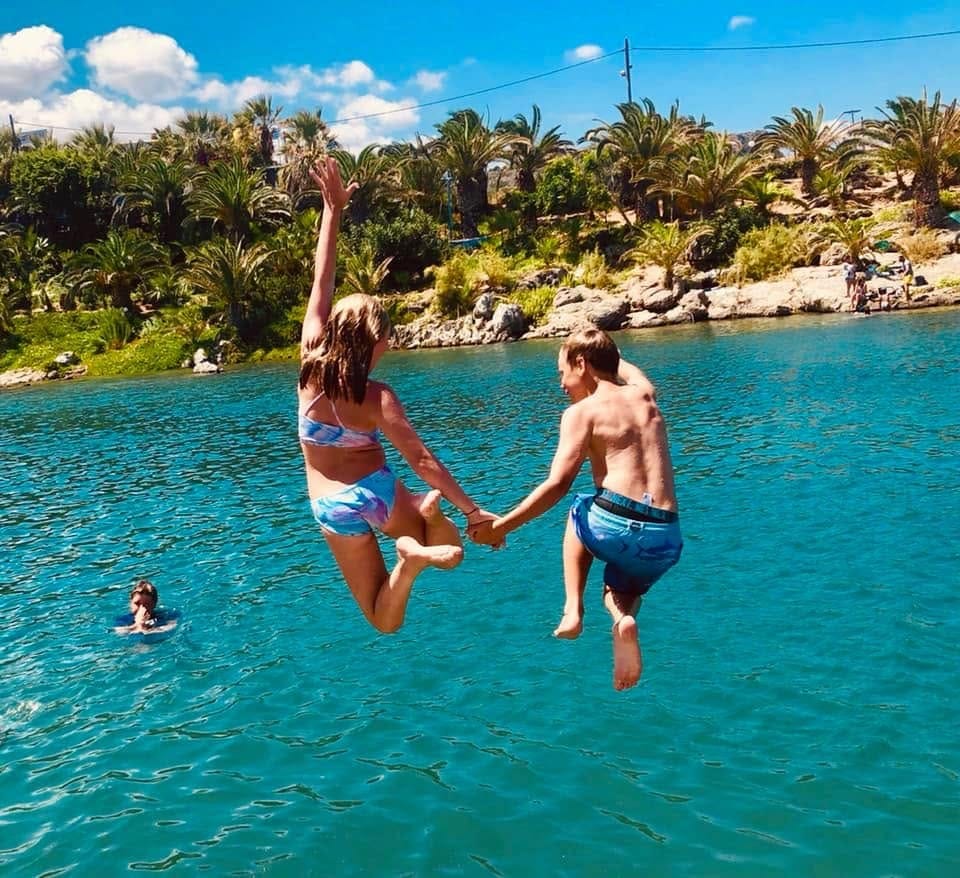
I remember the sea. It was impossibly blue, so clear it looked as though we’d wandered into another age entirely. An ancient Greek world of whitewashed walls, sleepy tavernas, olive groves and endless skies, where the days were measured by sunshine, secret coves and spontaneous football matches on the beach at dusk rather than by clocks and schedules.
I remember feeling fitter, healthier and more at peace than I have ever felt. I wasn’t chasing balance. I was simply living it.
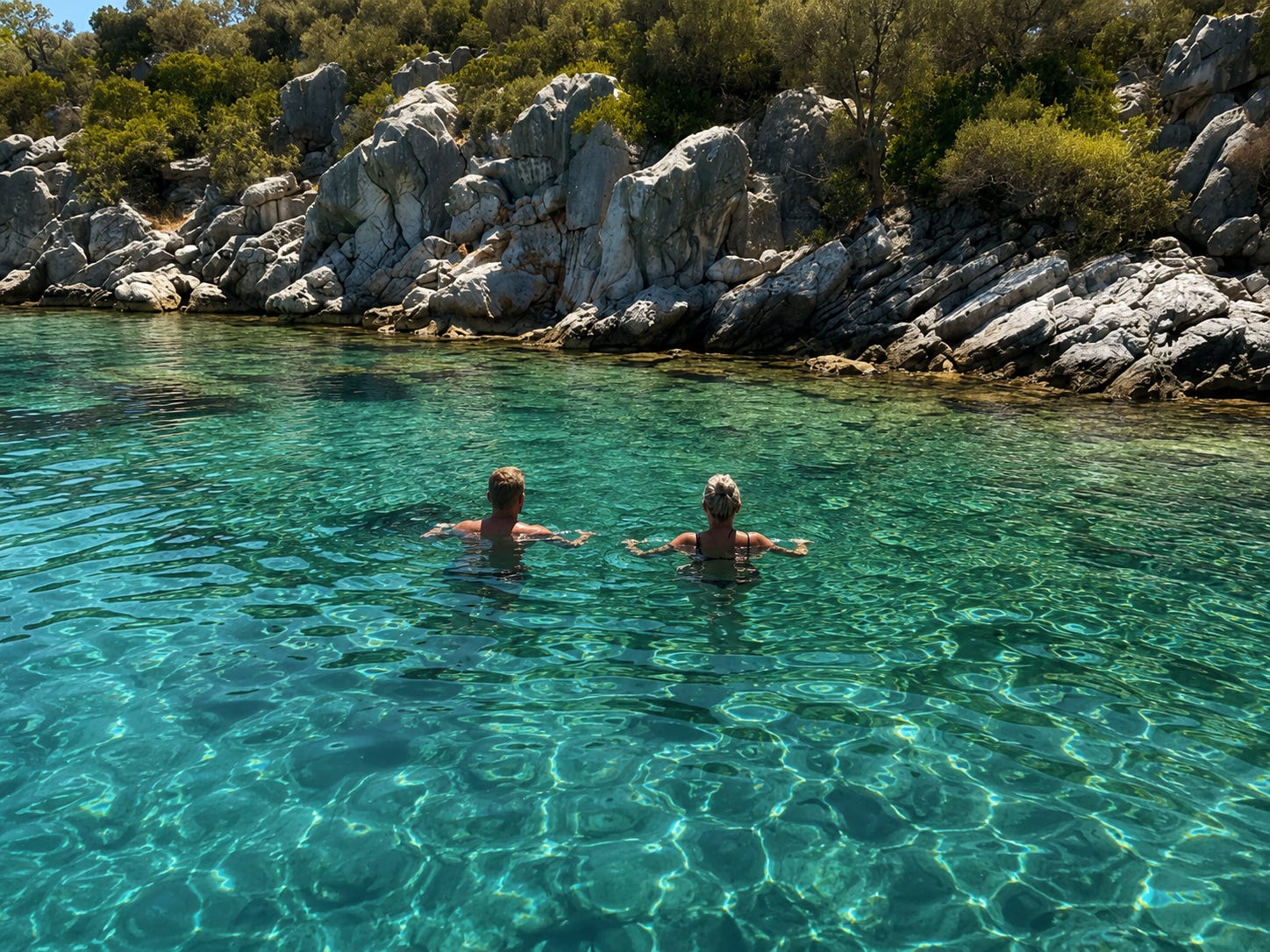
Greek music drifted through warm evening air as all five of us danced without caring who was watching. We struck up conversations with strangers because none of us had yet learnt to ration our openness. The children wandered happily through bustling markets, ice-cream in hand, returning with little trinkets that still sit in their childhood bedrooms, tiny souvenirs that have somehow outlasted childhood itself.
One day we drove across the island to Spinalonga after I had read The Island by Victoria Hislop. I remember standing on that tiny fortress, thinking about the lives of the people with leprosy who had once been banished there, separated from everything and everyone they loved. On the journey back, Alsatians bounded into the crystal waters of the Aegean Sea, swimming with an effortless joy that somehow sits alongside the memory of Spinalonga in my mind. Even now, I can’t think of one without the other.
Every evening began the same way. A game of Cheat or Blackjack before dinner, familiar cries of, “You’re a cheat!”, laughter spilling across the table, and that effortless companionship that comes when everyone you love is gathered in one place. I can still picture the children teasing each other, laughing until they couldn’t breathe and being gloriously themselves, before university, careers and adulthood began calling them elsewhere, before friendships became more complicated, appearances mattered more than adventures, and home slowly stopped being the centre of their world.
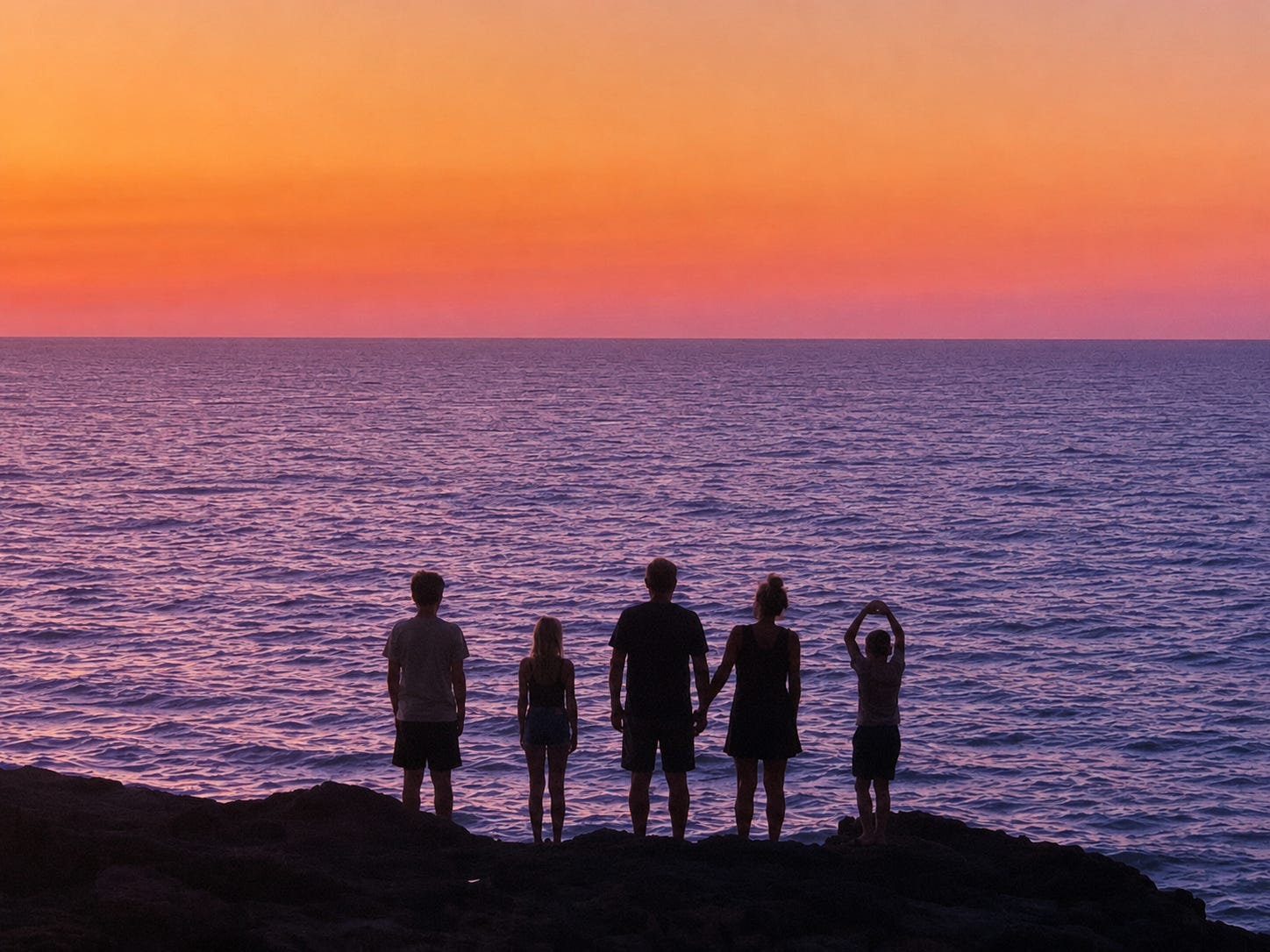
Most of all, I remember the illusion that time was abundant, never imagining I was already standing inside a memory. The wonderful, effortless ease of knowing everyone I loved would still be there tomorrow. We’d wake beneath the same roof, wander down for breakfast together, spend another day by the pool or beside that astonishing sea, and do it all again the following day.
It never crossed my mind that one day I would miss something so beautifully ordinary.
Isn’t memory wonderfully selective. It edits away the arguments, the tiredness and the ordinary frustrations. Like I’ve said before, it always keeps the feeling. The warmth of the evening sun, the laughter, the certainty and the belonging.
I think that’s why we all have a heartharbour.
It might be a time, or a place, a photograph, a holiday, a family kitchen, or an ordinary season of life that only reveals its extraordinary nature once we’ve sailed beyond it.
Not because life was perfect there.
It wasn’t.
No life ever is.
But because, for a while, everyone we loved was safely inside it.
I’ve often wondered why my heart returns to 2019 so often. I’ve come to realise it isn’t nostalgia. It’s gratitude. Gratitude for a version of life I never realised I was living while it was happening.
The strange thing about heartharbours is that we can never sail back into them.
The children will never be those ages again.
Dad will never answer the telephone.
Time keeps moving, the tides keep changing and every voyage leaves us a little different from when we first cast off.
Yet the harbour never truly disappears. It remains charted somewhere inside us.
These days, I’m under no illusion that what I’m living through now is another halcyon season.
It isn’t.
This has been the hardest stretch of water I’ve ever navigated, and writing has become one of the oars that keeps me moving forward. Grief has changed the tides beneath my feet. Some days it feels as though all I’m doing is bailing water and trying to keep the boat afloat.
Yet I’ve come to believe that heartharbours aren’t accidents. They are built, without us noticing, every time we choose to keep living.
They are in the greenhouse, where tiny seeds continue to believe in spring regardless of the weather. Dad never saw it flourish, yet it has become one of the places where I keep choosing tomorrow. I find it in muddy running shoes by the back door, in wild swims, in armfuls of unruly flowers gathered from the garden, in unexpected conversations, unopened maps and all the stories that are still waiting for me to live before I can write them.
One day, I hope I’ll turn around and realise that somewhere amongst the grief, the uncertainty and the beginning again, another heartharbour is taking shape.
Maybe that’s the nature of halcyon years. We never recognise them while we’re living them.
Because the tides never stop turning.
And neither do we.
Stories are a little like gardens. One often leads to another. If this essay found a place in your heart, you may enjoy Star-kept Lovers, where I tell the story of the man who has shared every voyage since we first met beneath a sky full of stars.

Oh Claire, you did it again. You pulled my heart along with yours to your heartharbour. This piece brought up so many memories for me.
Covid lockdown - the dividing line between before and after. Before, the family gatherings, music performances making it lively, everyone speaking to everyone, not perfect, but displays of love and affection during those times. The grandchildren at that fun age playing, cousins becoming close friends. I would often sit on the sofa or chair and watch it all, sometimes with my hearing aids out 🤭, and feel the energy of the room blowing all around me. During lots of arguments. BLM movement sparking debate, some of my kids identifying more with racism than others. More hurt. After, siblings not speaking to each other, adult children not speaking to parents, loss, fear, hurt.
I always go back to those memories to ground myself, to convince myself that they happened, they were real, that there was a time when love abounded.
Bloody covid.
I'm thankful for some healing among the siblings. I'm thankful for the memories I will always cherish. I'm thankful for the older grandchildren who come and love on us and share their memories of that time. They keep it going.
If you haven't yet read Claire's Substack, Ink & Ivy, you must. She is an amazing writer that deserves to be noticed.
💕💕💕
So evocative. So joyful and so heartbreaking.