

Becoming Leadless
When did we stop greeting ordinary mornings like Labradors?

There is a particular kind of wisdom that never interrupts.
It doesn’t offer advice across the dinner table. It doesn’t tell you to look on the bright side. It doesn’t try to fix what cannot be fixed. It arrives, lays itself beside you and stays until the worst has passed.
For the last ten years, the wisest member of our family has never spoken a single word.
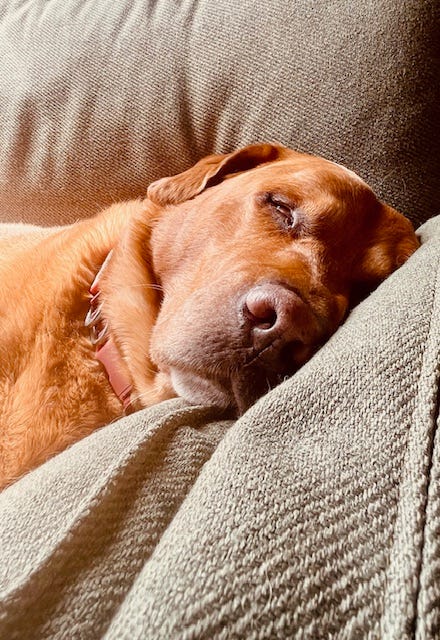
He’s asleep beside me as I write this. His once fox-red muzzle is beginning to soften into silver, his paws twitching occasionally as though he’s chasing Cyril the squirrel away from our cherry tree. Every so often he sighs, puffing out his cheeks before slowly drawing the air back in again, as though he has made peace with something the rest of us are still trying to understand.
I watch him more these days.
Time has started to leave its own small vestiges upon him.
Not enough for anyone else to notice. Just the gentlest whitening of his face. A walk that’s a fraction slower than it used to be. A run that takes a little longer to recover from. The way he now chooses comfort over chaos, shade over sunshine, rest over racing, the cool floor over our bed.
Age does not arrive with fanfare.
It prefers whispers.
Watching him grow older has made me realise something I hadn’t expected. For years I thought I’d been teaching Red how to live in our world: sit, stay, down, wait, paw, leave, let’s go, here, kiss. The shared vocabulary of dogs and humans trying to understand one another.
But along the way, our roles reversed.
Without ever intending to, Red began teaching me.
Not through obedience, but through enthusiasm. Not through discipline, but through trust. Not through words, but through the extraordinary consistency with which he greeted each ordinary day as though the whole world had been invented again overnight.
I had stopped doing that.
I had become caught up in the machinery of adulthood. The responsibilities, the expectations, the endless list of things that needed doing. I became less practised at noticing what mattered.
Scientists will happily explain why dogs bond with humans. They’ll talk about oxytocin and evolution, scent recognition and pack behaviour. They’ll tell us how dogs read our faces, detect hormonal changes and respond to shifts in our breathing long before we notice them ourselves.
I wholeheartedly believe all of that, but I also believe it misses something. None of it quite explains how one creature, covered in ginger fur and carrying a cuddly toy bought just for him, can become the emotional centre of an entire family. It doesn’t explain how Red can remind us of something we once knew instinctively: that joy was never meant to be rationed, postponed or earned. That play was never something we were supposed to leave behind with childhood.
That is the secret of a wildheart. Someone who never entirely outgrows the urge to climb the gate, follow the meandering path instead of the direct one, or stop mid-walk because a butterfly, a scent or a patch of sunlight has suddenly become the most important thing in the world.
Red has spent ten years proving that delight is not childish. It is alive.
His is real wisdom.
Now I know that the wisest soul I’ve ever lived with has spent his whole life trying to teach us the one thing adulthood persuades us to abandon: How to greet an ordinary morning as though it were a miracle.
Before there was Red, there was our Jake.
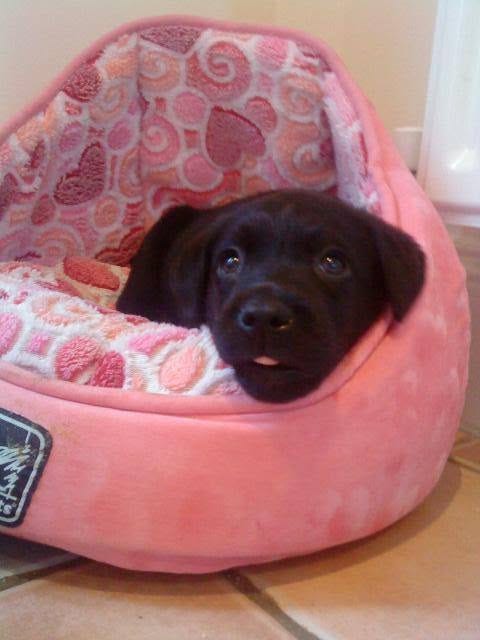
A black Labrador with the kindest eyes I’ve ever known and a heart so wild and woven into the fabric of our family that I genuinely couldn’t imagine our lives without him. He was only six when leukaemia took him.
Six!
An age that still feels impossibly young for a dog whose life seemed to have only just begun.
His death arrived with the kind of swiftness that leaves no time to prepare your heart. One week we were planning walks and marathon training, the next we were saying goodbye. I remember feeling not only grief but something stranger, an irrational guilt that refused to loosen its grip. We’d just moved into our three-hundred-year-old farmhouse, boxes still stacked against wonky walls, the smell of fresh paint mingling with old timber, and somewhere in the bewilderment of loss I found myself wondering whether we’d asked too much of him. Whether the upheaval, the unfamiliar rooms, the leaving behind of one home for another had hastened the end. Grief is rarely logical.
For weeks afterwards, none of us wanted to walk through the front door. The house we’d fallen in love with suddenly felt cavernous and unfamiliar. Beautiful, yes, but hollow. We hadn’t realised how much of what we’d called home had never been bricks or beams at all. It had been the sound of four paws padding across old wooden floors, a thick black tail thumping against the kitchen cupboards, the joyful collision of a Labrador launching himself at whoever had just come home. The certainty that, however hard the day had been, someone would always be waiting with a smile and a kiss.
A house can hold memories.
But it takes a heartbeat to make it home.
Our heartbeat had gone quiet.
We weren’t looking for another Jake. That would have been impossible, and perhaps a little unfair. We were simply trying to imagine laughter, silliness and excitement returning to rooms that had fallen silent.
Then, one afternoon at my parents’ house, while absent-mindedly scrolling through Gumtree, we found an advert for a litter of four fox-red Labradors.
I showed my phone to Dad.
He didn’t hesitate.
“Go and get him.”
Then he reached into his pocket, pulled out the deposit and pressed it into my palm, as though the decision had already been made.
That was Dad all over.
He’d loved dogs for ever. He spoke to them as though they were old friends who happened to communicate in a different language. While the rest of us were still discussing the practicalities, Dad had already pictured another pair of paws padding through his house and our farmhouse. Another companion. Another member of the family.
A few days later, we were driving to Norfolk.
Life has a habit of nudging us forwards while we’re still looking back.
There were two girls and two boys, hurtling around a sun-drenched garden while their mother kept one watchful eye on the chaos. They weren’t the sleepy, picture-perfect puppies I’d imagined. They hurled themselves through flowerbeds, wrestled with complete conviction and greeted every fallen leaf as though it were the most exciting discovery in canine history. It struck me, years later, that Labradors never really wake up. They continue the day’s adventure from wherever they happened to fall asleep.
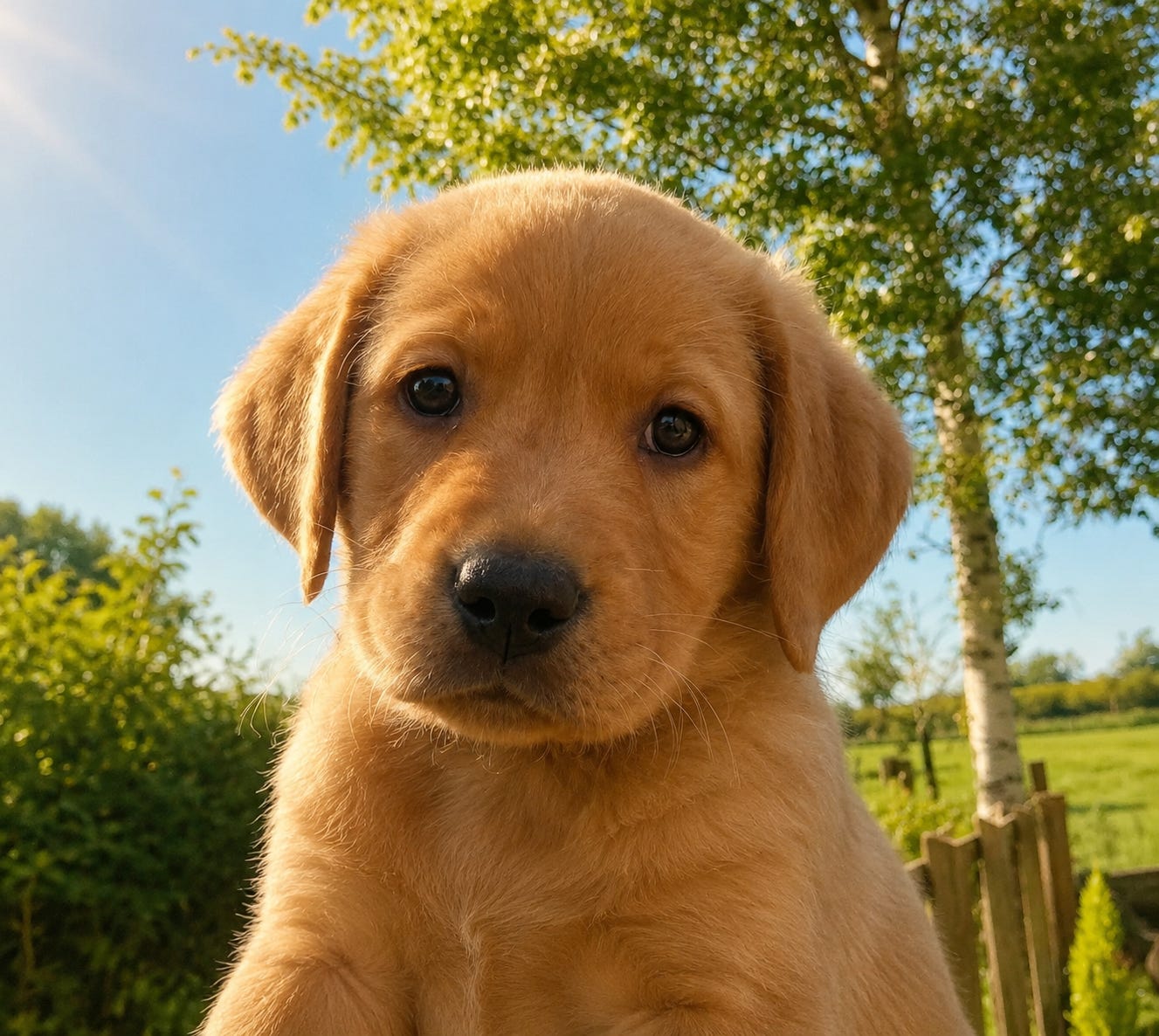
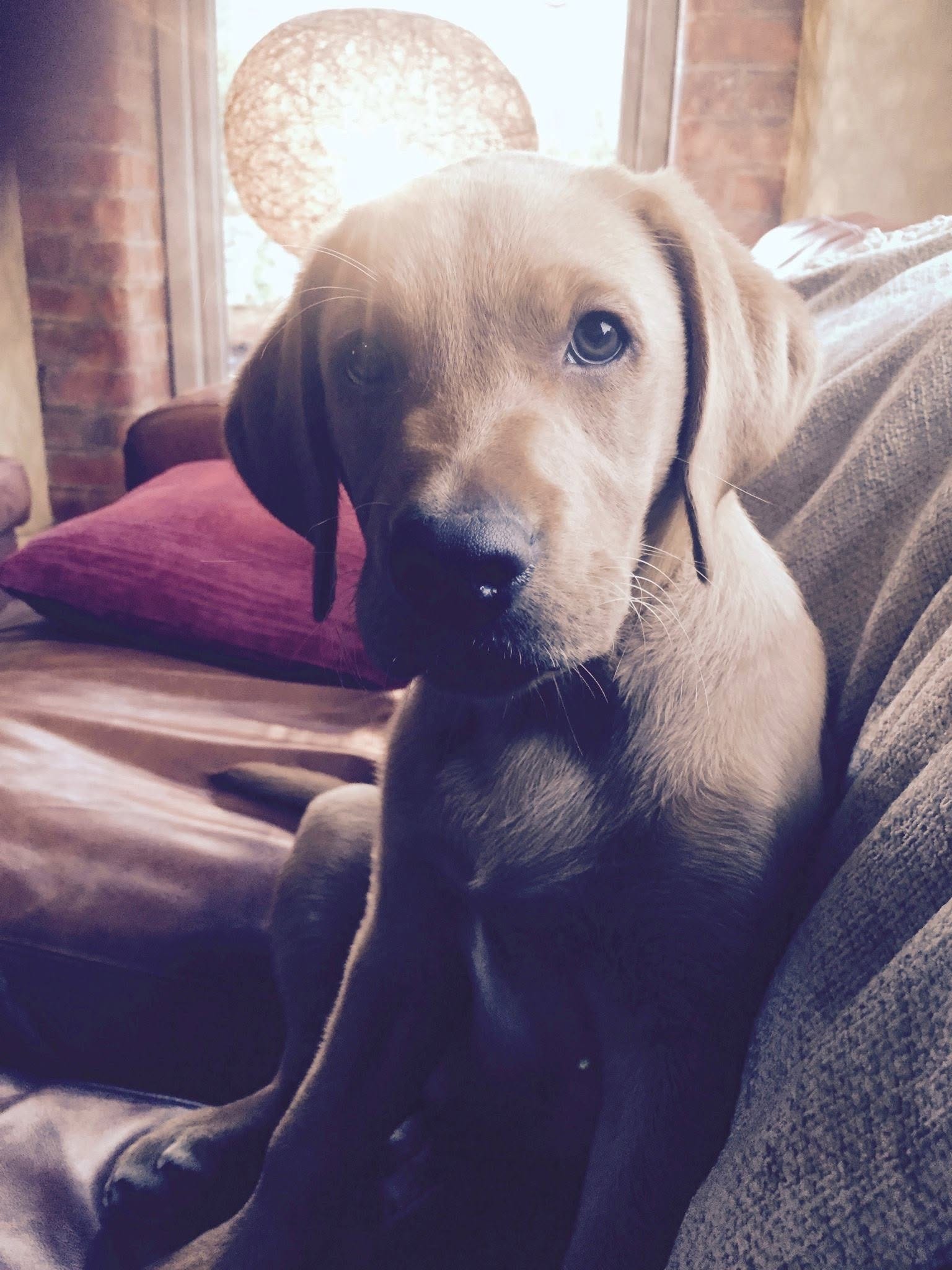
By the time we arrived, both girls had already been spoken for. So had one of the boys. The remaining puppy seemed blissfully unconcerned by this rather significant detail. There was no choosing, no weighing up temperaments or wondering which one might suit our family best. There was just one fox-red Labrador charging towards us on paws far too large for the rest of him, delighted beyond measure that strangers had appeared in his garden.
Adults are often suspicious of enthusiasm. Puppies never are.
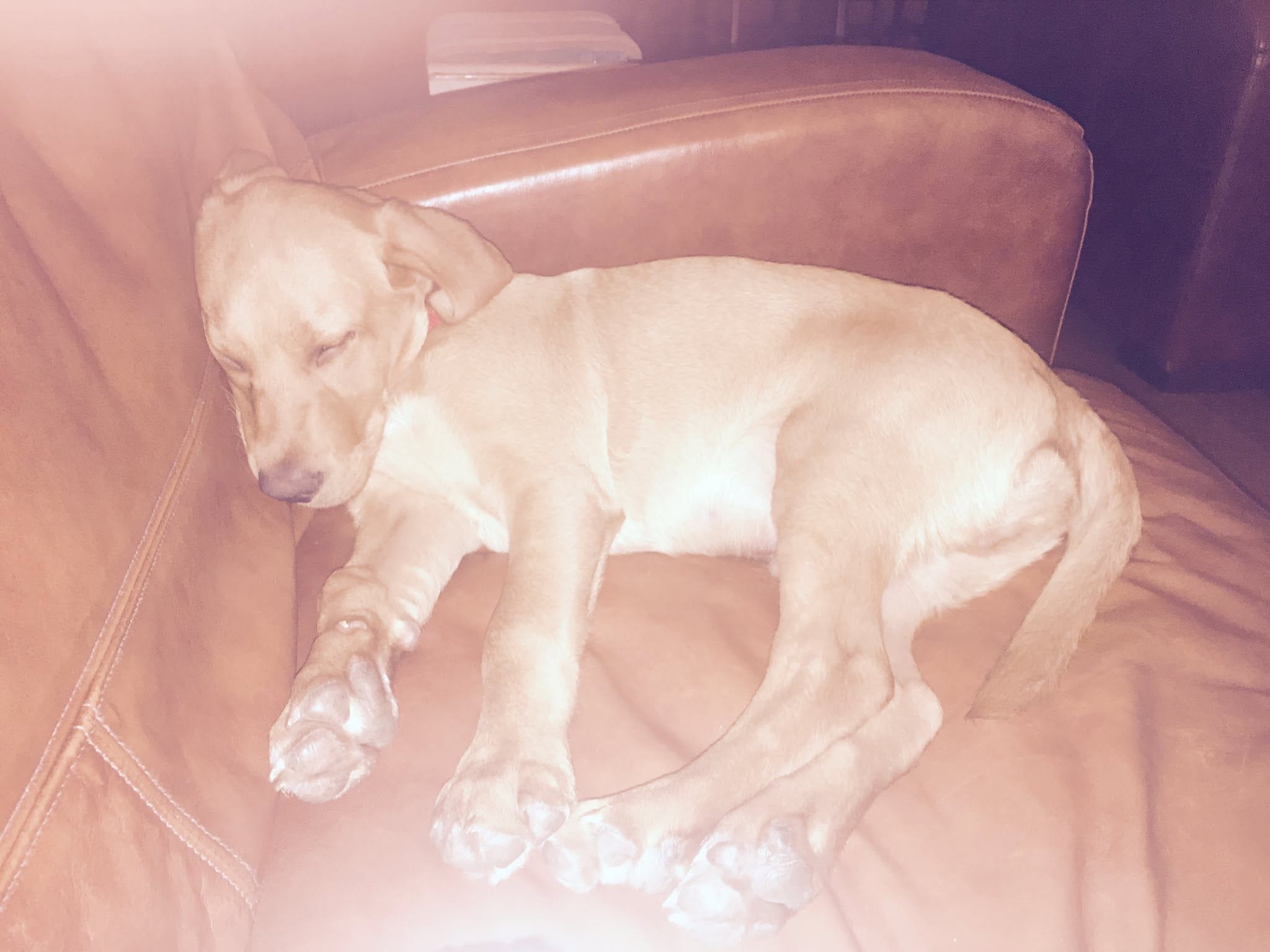
Between puppy breath, July sunshine and the uncomplicated joy with which he greeted five strangers, something shifted inside me. A small fateflicker passed through an ordinary afternoon, unnoticed in the moment but changing the shape of everything that followed. We left that garden having signed the paperwork and paid the deposit, knowing we would return a week later, to bring him home.
Puppyhood arrived like a small ginger tornado.
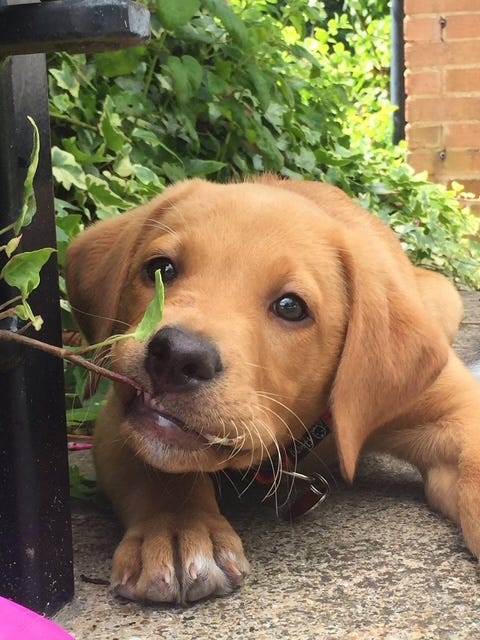
Within days, our ancient farmhouse had become an archaeological dig of chewed shoes, missing socks and mysterious puddles. The garden, already resembling the Battle of the Somme thanks to ongoing building work, was, in Red’s opinion, perfect. Mud wasn’t something to avoid. It was something to celebrate. He bounded through trenches with the joy of an explorer discovering a new continent, barked enthusiastically at a digger a thousand times his size and emerged each evening looking less like a Labrador and more like a creature sculpted from Lincolnshire clay.
Inside wasn’t much calmer. Leather seemed to possess an irresistible flavour. Boots disappeared with alarming regularity, followed by an expensive purse and a pair of sunglasses that became the unfortunate victims of what I can only assume was an intense scientific investigation into whether humans really needed them. Yet the extraordinary thing about Red wasn’t the trail of destruction. It was how deeply he felt it afterwards. Before we’d spoken a single word, he’d already know. An intake of breath. A glance across the room. The tiniest change in our expression or behaviour was enough. His ears would flatten, his amber eyes would widen with genuine remorse and, like a small ginger Dobby convinced he’d committed an unforgivable crime, he’d remove himself from the room and stand facing the wall at the end of the garden, punishing himself long before we ever could. We never sent him there. He merely couldn’t bear the thought that he’d disappointed us.
Jake, however, had been cut from entirely different Labrador cloth.
He once ate an entire chocolate birthday cake and looked up hopefully, waiting to see if there might be another. He was an escapologist, gate-crashing our neighbour’s barbecues on numerous occasions, stealing sausages straight from the grill and guests’ plates with the confidence of someone who genuinely believed he had been invited. He launched himself into septic tanks, disappeared through open gates and returned home muddy, triumphant and entirely unconcerned by any consequences.
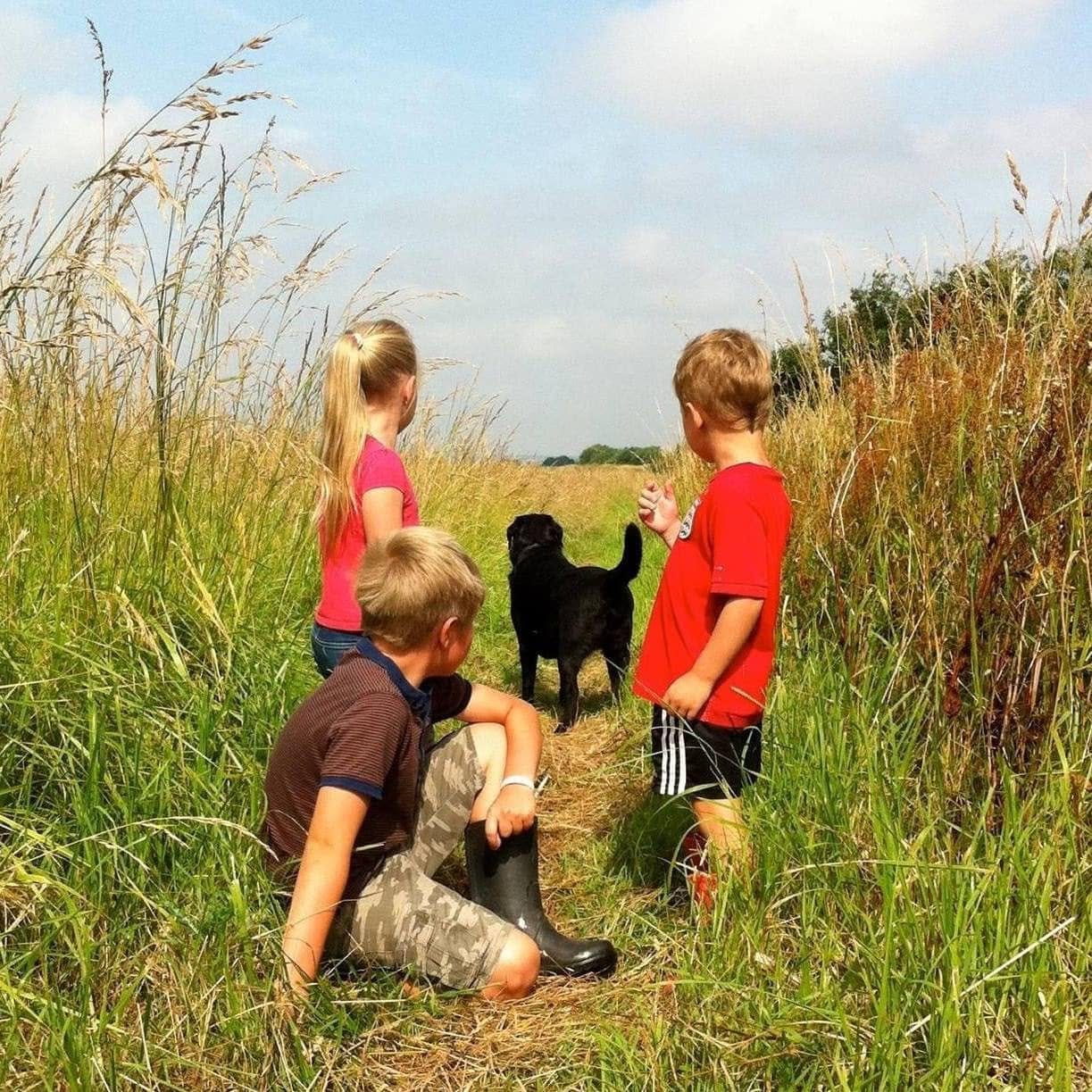
Jake possessed no self-preservation whatsoever. He lived with the glorious certainty that life was for enjoying and rules were merely suggestions. Why worry about tomorrow when there might be sausages or Bertie-Bots-Every-Flavour-Beans today?
Red was a completely different soul. He seemed to possess an impossibly tender conscience. His misdemeanours were spectacular, but his remorse was even greater. Before long we’d find ourselves crouching beside him, scratching behind those velvet ears and apologising for making him feel sad.
This was, without doubt, the first lesson Red taught us: love doesn’t always look the same. Some creatures bring chaos and laughter. Others bring comfort and connection. Both have left their paw prints on our hearts.
Red was a typical puppy. There were accidents; our carpets genuinely suffered. Stair gates were scaled with the determination of a mountaineer. One memorable afternoon ended with four perfectly spaced puppy poos decorating the bathroom floor after he’d accidentally imprisoned himself inside. Raising a Labrador puppy is rather like living with an exuberant toddler wearing permanent muddy wellington boots. Exhausting, expensive and almost impossible to stay cross with for long. Red wasn’t testing our patience. He was embracing life with a level of curiosity and enthusiasm most of us abandon around our late twenties.
Between childhood and middle age, many of us become far too sensible. We stop splashing through puddles. We stop dancing in the kitchen whilst we cook, singing at the top of our lungs in the car, or saying yes to an unplanned adventure. We become experts at efficiency, at getting things done, at knowing what needs to happen next.
I think we make ourselves smaller doing this.
We put joy on hold until the house is tidy, the emails are answered and everyone else is taken care of. We convince ourselves there will be more time later.
Watching Shirley Valentine recently, I believe that she and Red would have understood each other perfectly. One ran away to Greece; the other charged headlong into cornfields. Both seemed to know something the rest of us are in danger of forgetting.
When did we stop delighting in being alive?
To become leadless is not to be reckless or careless. It is freedom from fear. It is to trust enough to follow what calls us, to notice the unexpected and let joy interrupt the plans we make.
Red has spent his whole life doing this. A true wildheart, he has never forgotten the simple art of being fully present: the joy of a familiar path, the excitement of a new scent, the belief that an ordinary morning might still contain something wonderful. He wakes up every morning gloriously unburdened by the weight of being “appropriate”. He has no idea that adults are obligated to be sensible, restrained or productive before they are allowed to be happy.
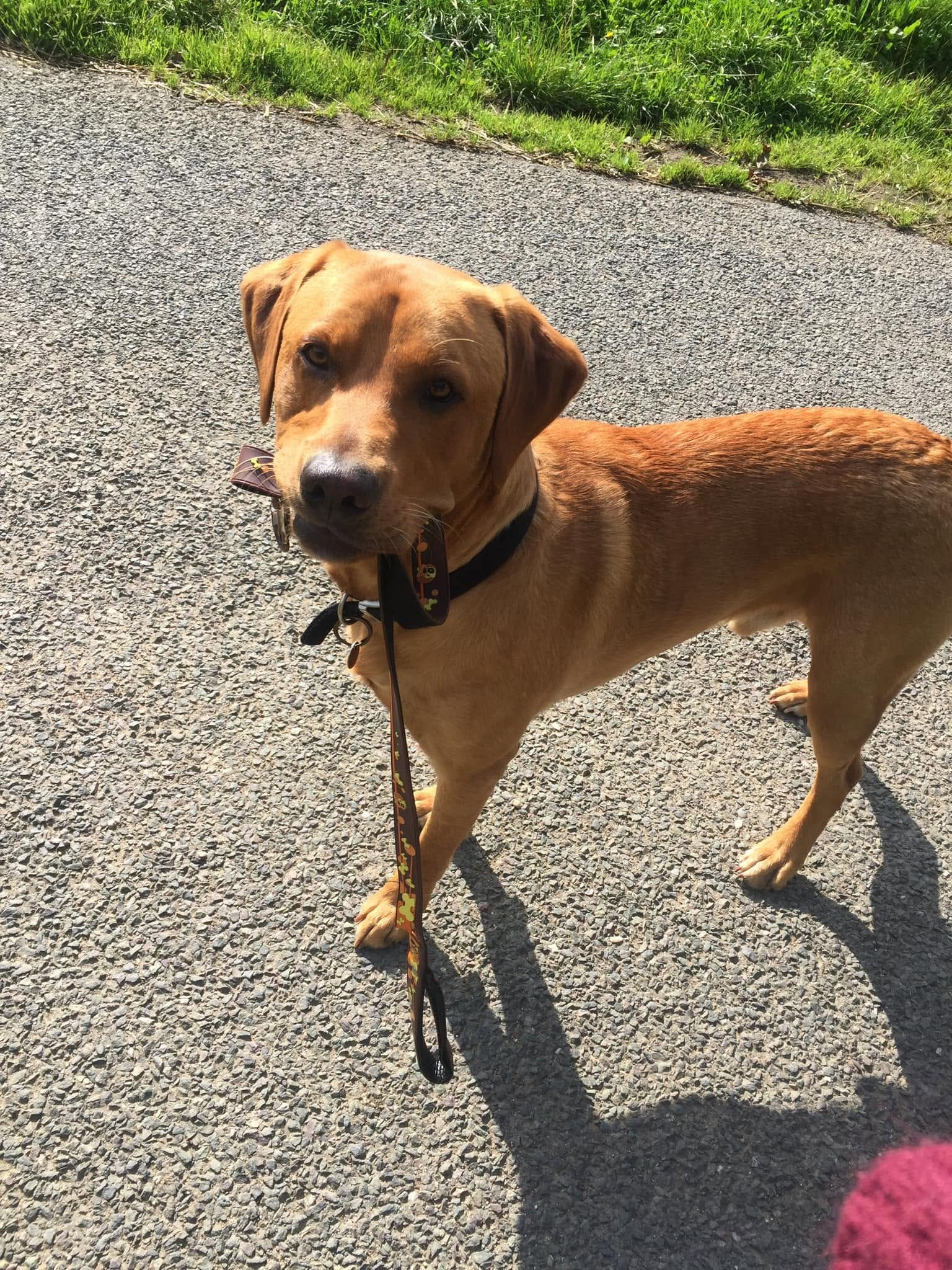
That is exactly why he is my teacher.
The greatest thing Red has taught me is that the world is constantly communicating with us and we have become very good at not listening.
He always knows when a storm is coming.
Long before the first rumble of thunder reaches our ears, Red knows. His head lifts. His ears move. His whole body becomes alert, not with panic. He’s not scared; he is paying attention. It is as though he is listening to a conversation taking place somewhere beyond our hearing. The air shifts. The light changes. Something invisible moves across the landscape, and he knows.
Humans are good at pretending we cannot feel the weather moving in. We ignore the tension in a room. We dismiss the heaviness in someone’s voice. We carry on long after our instincts have already whispered that something isn’t right.
Red doesn’t do that.
If there are raised voices in the house, he doesn’t take sides. He doesn’t attempt to solve the problem. He unassumingly gets up, looks at us with an expression that states, really? You’re all doing this again? and walks away to a quieter room. Under the piano maybe or under my desk.
He refuses to participate in unnecessary storms.
His superpower and wisdom are knowing when to walk away.
The older my children became, the more I began to understand another lesson Red had been teaching us: How to let go.
There was a time when our farmhouse was full of noise. The kind of noise that only comes with children growing up. Doors opening and closing. Footsteps running across old floors. Music pumping from bathrooms and bedrooms and drifting downstairs. Pianos and drums rumbling through the walls. Friends arriving. Laughter filling the rooms. Shoes abandoned in hallways. Coats left over chairs. Bodies in beds. The constant movement of children becoming.
The farmhouse held it all: the chaos, the music, the friendships, the growing pains, the beautiful mess of young lives unfolding within its walls. It was never still, and I never wanted it to be.
Then, slowly, as all children must, they grew up and began to leave.
Rooms have become quieter. The house changed shape. The echoes grew longer. As humans, we often struggle with this part of love. I know I do deeply. We hold on. Oh, my goodness we worry. We measure distance as loss. We wonder if someone leaving means something has been taken away.
Red never did.
He never stood at the door wondering whether the person walking away would come back. He never carried the anxiety of the future. He loved completely while they were there, and when they returned, whether it had been five minutes or five weeks, he greeted them as though their absence had never mattered.
This is another vital characteristic of being leadless. To love without trying to hold someone still. To trust that a connection strong enough does not need a tether. Red has never needed to know where his people are going. Only that they are his people and that they will return.
Another beautiful friendship Red formed was with my dad.
Like I said earlier, Dad had always loved dogs. Not in the casual way some people like animals, but in the way that suggests a quiet recognition between souls. He spoke to the dogs at times more than he spoke to us. He never seemed embarrassed by it. He understood that conversation did not always require words.
Dogs seemed to understand him perfectly. They would always sit by him, rest their heads upon his knee. Trust him.
Jake had loved Dad’s generosity and enthusiasm and Red inherited that same bond. Despite all the rules we had carefully established about treats and healthy eating, Red and Dad developed their own arrangement involving peanuts and Magnums. Dad ate the chocolate and Red got the ice-cream.
An agreement understood without negotiation.
Looking back, those small moments feel almost impossibly precious. A man. A Labrador. A summer afternoon. A melting ice cream slowly disappearing between two friends who never needed to explain what they meant to each other.
When Dad became ill, Red seemed to understand the change in all of us. He became more watchful. Less interested in chasing life and more interested in simply being near it.
After weekends spent at the hospital, I would walk through the front door exhausted, carrying the weight of conversations I never wanted to have and realities I wasn’t ready to accept. Red would greet me as he always had, with the joy of a Labrador seeing his person return.
But then something changed.
As soon as I sat down, he would climb onto me and settle there. Not beside me. On me. His entire body pressed against mine, refusing to move until I eventually insisted that I needed to go to bed. Even then, he would follow me upstairs and continue his vigil, lying beside me as though his job was simply to make sure I was not carrying everything alone.
He never asked what was wrong.
He never needed an explanation.
He knew the weather had turned, and he instinctively stayed close.
Red is ten now. The farmhouse has changed. The children have grown. The people and creatures who have filled these rooms have left their marks, some still here, some carried only in memory. That is the strange thing about love. It does not stay the same; it grows, stretches, morphs. A kind of crescence; the slow and natural growing of something beautiful before we even realise it has taken root.
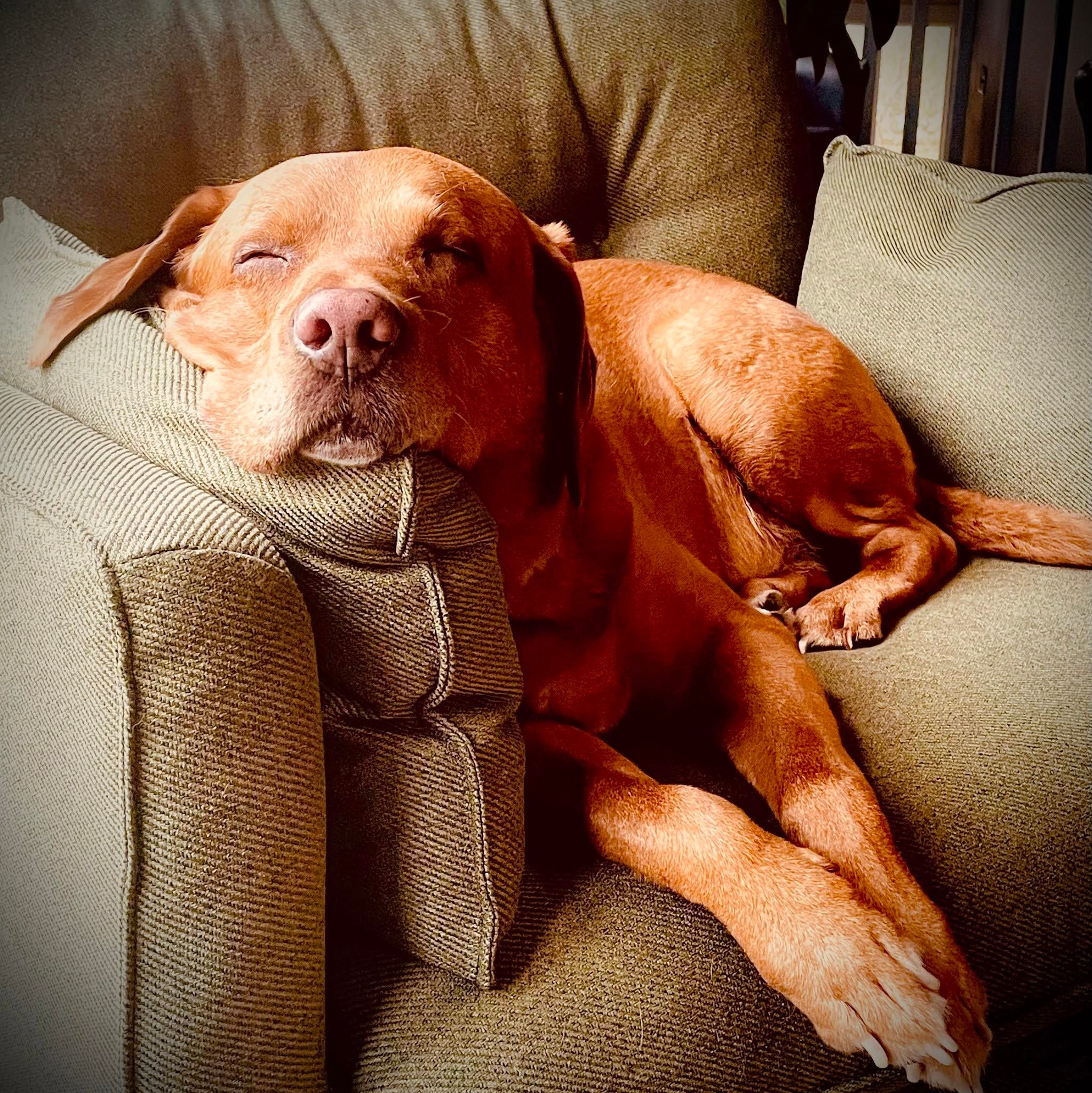
Tomorrow morning, he will wake believing the day deserves his full attention. He will lift his nose to the air, check the garden for squirrels and greet the world as though it has never existed before.
I am finally learning to do the same.
To become leadless.
Following the path ahead, knowing that everything we love leaves something of itself behind. There will always be a soulsigh when seasons end, when people leave, when moments become memories, but that ache is proof of something so wonderful.
That we were there.
That we loved.
That we were fully alive.
😭😭😭
I don't have words at the moment....
There were so many layers that resonated with my life and soul.
Just beautiful...🧡
Lovely 💕